
Want to simplify your IT management? Hosted services let third-party providers handle your server maintenance and software updates, freeing you to focus on your business. This article explains what hosted services are, their advantages, and how they compare to cloud and on-premise solutions.
Key Takeaways
Hosted services provide remote access and management of applications and data, reducing the need for local IT infrastructure.
There are various types of hosted services, including SaaS, IaaS, and PaaS, each catering to specific business requirements.
When selecting between hosted, cloud, and on-premise solutions, businesses must evaluate their needs for cost, control, security, and scalability.
|
Best for Small Business

|
Best e-commerce

|
Best for Blogging

|
Best Web Design Services

|
|
Our Rating:
5.0
|
Our Rating:
4.6
|
Our Rating:
4.6
|
Our Rating:
4.5
|
|
Pros:
|
Pros:
|
Pros:
|
Pros:
|
|
Cons:
|
Cons:
|
Cons:
|
Cons:
|
- Long-established (since 2003)
- 24/7 live chat support
- Free SSL certificates
- Daily backups
- Free domain registration
- Unmetered bandwidth
- One-click WordPress installation
- Strong track record of reliability
- Regular promotional discounts
- Comprehensive hosting options (Shared, VPS, Dedicated)
- WordPress-optimized features
- Higher price point for VPS and dedicated hosting
- Initial promotional rates increase after first term
- User-Friendly
- No coding knowledge required
- Drag-and-drop interface
- Quick store setup
- AI-powered product descriptions
- 100+ customizable templates
- Built-in sales dashboard
- Inventory tracking
- Global shipping support
- POS system for physical stores
- Strong Infrastructure
- Fully hosted solution
- 24/7 customer support in 21 languages
- Built-in SEO features
- Comprehensive analytics
- Integrated blog platform
- 8,000+ apps available
- Shopify Payments system
- Higher-tier plans needed for advanced features
- Paid apps can be costly
- Transaction fees for non-Shopify Payments
- Custom coding requires learning Liquid language
- No built-in file upload system for custom orders
- No email hosting included
- Free, open-source content management system
- Potential plugin conflicts cause sites to break easily
- Award-winning support
- NVMe technology for VPS and Dedicated hosting
- CodeGuard automated backups
- Professional web design services
- SiteLock security included
- Multiple email hosting solutions
- Google Workspace integration
- Comprehensive hosting options (Shared, VPS, Dedicated)
- Professional design services available
- No longer offers Reseller and Windows Shared hosting (as of Nov 2023)

Understanding Hosted Services

Hosted services offer a convenient way to store, share, and access data or tools from virtually anywhere, all managed by third-party vendors. This approach frees businesses from the burden of maintaining their IT infrastructure, allowing them to focus on core activities. Imagine not having to worry about server maintenance or software updates; hosted services enable this by providing remote access to applications and data, eliminating the need for local infrastructure.
One common form of hosted service is web hosting services, which allows individuals and businesses to publish websites online without managing the underlying hardware of a web server. Similarly, email hosting services enable users to send and receive emails using custom domain names, all without the hassle of managing server hardware. Additionally, a reliable hosting service can enhance the performance of these online platforms.
Database hosting services further illustrate the benefits of hosted solutions by offering online data storage and management without the need for physical servers. These examples highlight the versatility and efficiency of hosted services, making them an attractive option for many businesses.

BLUEHOST: TRUSTED SMART HOSTING SINCE 2003
Industry leader powering millions of websites worldwide. Get enterprise-grade hosting with:
- 24/7 expert support
- WordPress optimization & 1-click install
- Free SSL & daily backups
- Unmetered bandwidth
- Free domain registration
Starting at competitive rates with regular promotional discounts!
Types of Hosted Services

Hosted services come in various forms, each catering to different business needs. One of the most popular types is Software as a Service (SaaS), where software applications are delivered via the internet and managed entirely by the service provider, typically on a subscription basis. This model is ideal for businesses looking to reduce the complexities associated with software management.
Infrastructure as a Service (IaaS) provides users with virtualized computing resources over the internet, offering flexibility in resource management. Platform as a Service (PaaS) goes a step further by providing a platform for developers to create applications without worrying about the underlying infrastructure, thus speeding up development processes.
Additionally, Desktop as a Service (DaaS) offers virtual desktops accessible from anywhere with an internet connection, while Disaster Recovery as a Service (DRaaS) ensures businesses can recover their data and IT infrastructure in the event of a disaster. These numerous types of hosted services offer diverse solutions to meet various business requirements.
Hosted vs. Cloud Services
When comparing hosted services to cloud services, one of the primary differences lies in the infrastructure. Hosted services often include dedicated physical servers, providing a more isolated environment for each user. In contrast, cloud services typically utilize virtualization technologies, allowing multiple users to share resources in a public cloud model. This shared resource model in cloud services offers greater flexibility and scalability, as users can easily scale resources up or down based on demand.
Managed and maintained by the cloud service provider, cloud computing services reduce the workload for users, allowing them to focus on their core operations. Popular examples of cloud services include public cloud offerings from giants like Microsoft Azure and Google Workspace, which provide robust and scalable solutions for businesses of all sizes. However, this convenience comes at the cost of reduced control over the infrastructure, which can be a critical consideration for businesses with specific compliance or customization needs.
While hosted services provide dedicated resources that can be tailored to specific business requirements, cloud services offer broader flexibility and are often more cost-effective due to their shared nature. Both models have their unique advantages, and the choice between them largely depends on the specific needs and priorities of the business.
Hosted Services vs. On-Premise Solutions
Hosted services and on-premise solutions represent two fundamentally different approaches to IT infrastructure. On-premise solutions involve hosting software and data on the company’s physical servers, providing greater control and customization options. However, this control comes with significant responsibilities, including high upfront capital expenditure and ongoing maintenance costs. Businesses must also be prepared for unexpected costs associated with maintaining and upgrading their on-premise infrastructure.
In contrast, hosted services utilize remote servers managed services by a third-party provider, offering a more cost-effective and scalable solution. This model reduces the need for significant initial investments and allows businesses to scale their resources easily as their needs change.
However, a potential drawback of hosted services is the variable levels of control over data, which may not be suitable for all businesses. Each option presents unique advantages and challenges, and the decision between hosted services and on-premise solutions should be based on a thorough evaluation of the business’s specific needs and long-term goals.
Benefits of Hosted Services

One of the most compelling benefits of hosted services is their cost efficiency. Unlike on-premise solutions that require significant upfront investments, hosted services typically offer lower initial costs and a predictable monthly pricing model. This is particularly advantageous for small to medium-sized businesses that may not have the capital to invest in extensive IT infrastructure.
Hosted services also provide flexibility and enhanced security, making them suitable for various organizational needs. Cloud hosting services often implement advanced security measures that surpass what smaller businesses might achieve on their own.
Additionally, hosted services promote mobility by allowing users to access data and applications from virtually any location, facilitating remote work and enhancing operational convenience. These benefits, combined with minimal maintenance requirements, enable businesses to focus more on their core activities.
Choosing Between Hosted, Cloud, and On-Premise Solutions
Choosing the right IT infrastructure solution requires a careful consideration of the benefits and drawbacks of hosted, cloud, and on-premise solutions. Each model offers unique characteristics that can significantly impact a business’s scalability, control, and operational efficiency.
Understanding these differences and evaluating how they align with the specific needs and goals of your organization is crucial in making an informed decision.
Evaluating Your Current Infrastructure
Assessing your current IT infrastructure is a critical step in determining the suitability of hosted, cloud, or on-premise solutions. This evaluation involves examining existing hardware, software, and resource allocation to identify any gaps or inefficiencies that need to be addressed. Understanding the current state of your infrastructure helps align your IT strategy with business goals.
Transitioning to a managed service can free up IT personnel to focus on more innovative projects, driving greater business value. This assessment process not only optimizes resource utilization but also improves overall operational efficiency, paving the way for a smoother transition to the chosen IT solution.
Budget Considerations
Budget considerations are paramount when choosing an IT solution. It’s essential to account for both immediate costs and long-term financial implications. A thorough budget analysis should include growth projections and operational expenses across different infrastructure types to ensure the chosen solution remains cost-efficient over time.
Security and Compliance
Security and compliance are critical factors in selecting the right IT solution. Different service models offer varying levels of control, with on-premise solutions often providing more direct control over security measures. In contrast, multi-tenant setups in hosted services apply uniform compliance measures across all tenants, simplifying regulatory adherence.
Businesses must carefully consider their security and compliance needs, particularly if they operate in highly regulated industries. Ensuring that the chosen service model aligns with regulatory requirements can prevent potential legal and financial repercussions.
Single Tenancy vs. Multi-Tenancy in Hosted Services
Single tenancy and multi-tenancy represent two distinct approaches to resource allocation in hosted services.
In a single-tenancy model:
A single application and its infrastructure are dedicated to one customer
Resources are not shared with others
This setup allows for greater customization, as each tenant can tailor their environment without affecting others.
On the other hand, multi-tenancy allows multiple customers to share the same resources, leading to cost efficiencies. While this model may offer less customization, it can significantly reduce overall resource expenses, making it an attractive option for many businesses.
The choice between single tenancy and multi-tenancy should be guided by the specific needs and priorities of the organization.
Reliability of Hosted Services

The reliability of hosted services is a crucial consideration for any business. Top-tier hosting providers often guarantee uptime percentages of 99.99% or higher, ensuring continuous service availability. High availability systems aim for an operational uptime of 99.999%, meaning that systems can quickly recover from failures, minimizing downtime.
Reliability is further enhanced through redundancy, which involves using multiple data centers and comprehensive disaster recovery plans. These plans outline specific procedures to restore operations effectively after a disruption, ensuring business continuity. Evaluating a provider’s disaster recovery plans and redundancy measures is essential to maintain high levels of reliability.
Providers should also proactively share their uptime statistics and detail the measures they have in place to maintain continuous service, giving businesses the confidence that their operations will not be significantly disrupted.
How to Choose a Hosted Service Provider
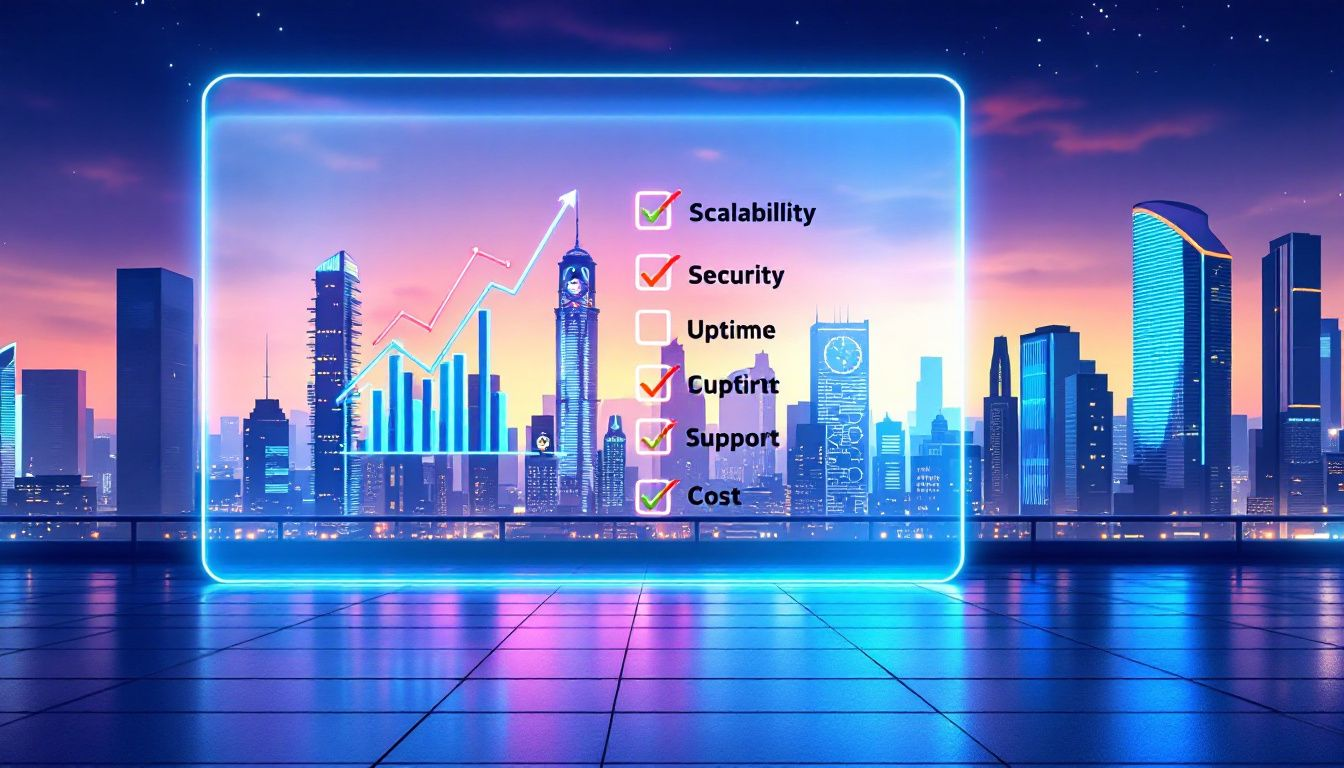
Selecting the right hosted service provider is crucial for ensuring quality service and data security. One of the first steps is to examine the provider’s service level agreements (SLAs), which outline their performance guarantees and expectations. Managed service providers and service providers play a significant role in this process.
Additionally, it’s important to review the provider’s customer support quality, as prompt assistance and issue resolution can significantly impact your business operations. Investigating the security measures, such as data encryption and compliance certifications, helps assess how well the provider protects sensitive information.
These factors combined will ensure you choose a provider that aligns with your business needs and priorities.
Summary
In conclusion, hosted services offer a range of benefits, including cost efficiency, flexibility, and enhanced security. By understanding the differences between hosted, cloud, and on-premise solutions, businesses can make informed decisions that align with their specific needs and goals. Whether you choose hosted services, cloud solutions, or on-premise infrastructure, each option has its unique advantages and challenges. Evaluating your current infrastructure, budget, and security requirements will guide you towards the best choice for your organization.
Frequently Asked Questions
What are hosted services?
Hosted services are essential solutions offered by third-party vendors, enabling businesses to store, share, and access data or tools remotely, all without the need to manage local IT infrastructure. This approach enhances efficiency and scalability for organizations.
How do hosted services differ from cloud services?
Hosted services typically rely on dedicated physical servers for individual users, whereas cloud services use virtualization technologies to share resources among multiple users. This distinction impacts scalability and flexibility, making cloud services generally more adaptable to changing needs.
What are the benefits of hosted services?
Hosted services provide cost efficiency and flexibility while enhancing security and reducing maintenance efforts, enabling businesses to concentrate on their primary activities.
How do I choose between hosted, cloud, and on-premise solutions?
To choose between hosted, cloud, and on-premise solutions, evaluate your existing infrastructure, budget, security requirements, and compliance needs. Align these factors with your business objectives to determine the best fit for your organization.
What should I look for in a hosted service provider?
When choosing a hosted service provider, prioritize their service level agreements (SLAs), the quality of customer support, and robust security measures to align with your business needs effectively.

